
Breaking a drinking glass usually means one simple thing: it is time to throw it away and buy another one.
But what if that did not always have to be the case?
Imagine dropping a glass in your kitchen, watching it crack across the floor, and instead of reaching for the trash can, opening a digital design file and producing a replacement with a 3-D printer. It sounds futuristic, but advances in additive manufacturing, materials science, computational design, and smart manufacturing are gradually making ideas like this more realistic.
3-D printing has already moved far beyond the world of plastic prototypes and hobby projects. Researchers and manufacturers are exploring ways to print increasingly complex objects using ceramics, metals, polymers, composites, biological materials, and even specialized glass-based materials.
The possibility of 3-D-printed glass is particularly interesting because ordinary glass is not an easy material to manufacture layer by layer. It requires high temperatures, careful control of its composition, and precise management of how the material cools. A successful printing process therefore requires much more than simply telling a machine to reproduce the shape of a drinking glass.
It requires a combination of materials science, computer modeling, precision engineering, and advanced manufacturing technology.
What Is 3-D Printing?
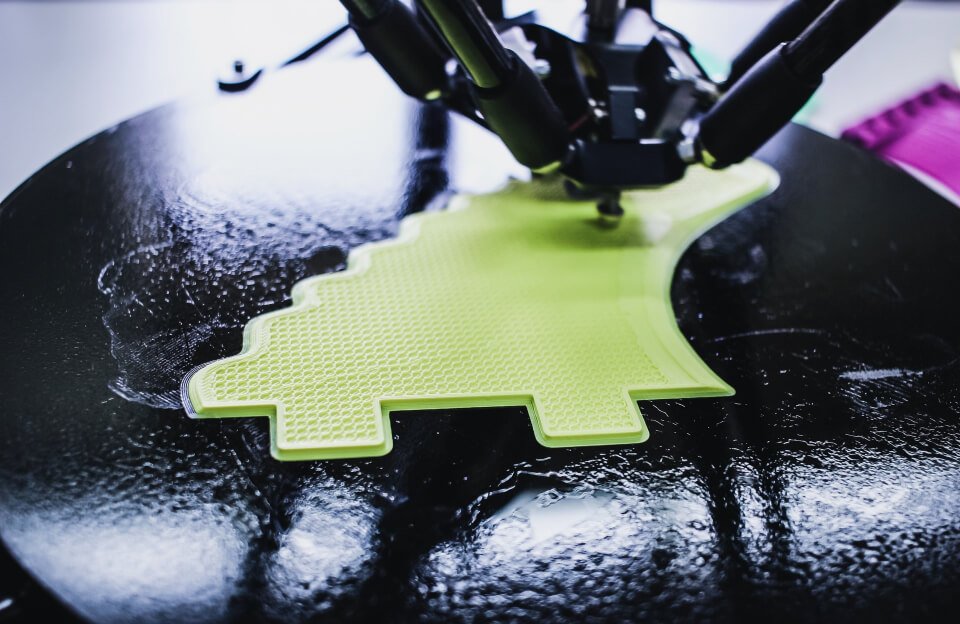
3-D printing is a manufacturing process in which an object is created by building it layer by layer from a digital design.
Traditional manufacturing often starts with a block, sheet, tube, or other piece of material and removes or reshapes portions of it. This can involve cutting, drilling, molding, grinding, or machining.
Additive manufacturing works differently.
Instead of starting with a finished piece of material and removing parts of it, a 3-D printer adds material only where it is needed. The printer follows a digital model and gradually builds the object into its final form.
This approach can provide several advantages.
Designers can create complicated shapes that may be difficult or expensive to manufacture using conventional methods. Manufacturers can also experiment with customized products, small production runs, lightweight structures, and designs that would otherwise require multiple manufacturing steps.
For researchers, perhaps the most important advantage is flexibility.
A digital design can be modified, tested, and printed again without necessarily requiring an entirely new manufacturing setup.
Why Is Printing Glass So Difficult?
Glass may look simple, but producing it is scientifically complicated.
Most conventional glass manufacturing involves heating raw materials until they become a molten or highly workable material. The material is then shaped and cooled under controlled conditions.
A 3-D printer, however, needs to control the material while creating an object gradually.
That creates several challenges.
Temperature Control
One of the biggest problems is temperature.
Glass must be heated enough to become workable, but the temperature must also be controlled carefully during printing. If different portions of the object cool at different rates, internal stresses can develop.
Those stresses may cause cracks or even cause the printed object to break.
A successful printing system therefore needs accurate control over heating, cooling, deposition, and the surrounding environment.
Material Flow
The material also needs to move through the printing system in a predictable way.
If molten or softened glass flows too quickly, the printed structure may lose its intended shape. If it flows too slowly, the printer may struggle to create continuous layers.
The relationship between temperature, viscosity, pressure, and movement becomes extremely important.
Layer Bonding
A 3-D-printed object is built from successive layers. Those layers need to connect properly to create a strong final structure.
With glass, this is particularly challenging because the material’s properties change significantly as its temperature changes.
If one layer does not bond correctly with the next, weak points may develop inside the finished object.
Cooling and Strength
Cooling is another major issue.
Glass that appears solid on the outside may still contain internal stresses. Controlled cooling is therefore essential when producing strong glass objects.
This is one reason why printing a useful glass product is considerably more complicated than simply printing a shape.
Researchers Are Exploring New Ways to Print Glass
Scientists and engineers have investigated several approaches to producing glass-like structures through additive manufacturing.
Some methods work with glass particles or specially prepared materials that can be deposited into a desired shape before being treated at high temperatures.
Other approaches use glass that has been heated sufficiently to become printable.
The exact process depends on the type of glass, the desired object, the printer design, and the required properties of the finished product.
The goal is not merely to create something that looks like glass.
Researchers need the resulting material to behave like a useful engineered product.
That means considering transparency, strength, thermal resistance, surface quality, chemical stability, dimensional accuracy, and durability.
Could You Really Print a Drinking Glass?
Potentially, yes.
A drinking glass is actually an interesting example of how additive manufacturing could eventually become useful for everyday objects.
Instead of storing thousands of different physical products, a future manufacturing system could potentially store digital designs.
A consumer might select a particular shape, size, thickness, or pattern from a digital library. A suitable printer could then manufacture the object locally.
If a glass breaks, the replacement could theoretically be produced without transporting another finished product from a factory.
However, this does not mean that home glass printing is about to replace conventional glassware manufacturing.
There are still significant technical and economic challenges.
For mass-produced drinking glasses, conventional manufacturing can already produce enormous quantities efficiently. A 3-D printer would need to offer a compelling advantage in customization, convenience, material efficiency, or local production to compete with established manufacturing methods.
The Bigger Idea: Digital Manufacturing
The most important idea behind 3-D-printed glass may not be the glass itself.
It is the concept of digital manufacturing.
In a digitally driven manufacturing environment, physical products can increasingly be represented as digital designs.
A product does not necessarily need to exist as a physical inventory item until someone needs it.
Instead, a digital model can be stored, modified, transmitted, and manufactured when required.
This could change how companies think about inventory.
Instead of keeping large quantities of replacement parts in warehouses, businesses could potentially maintain digital inventories and manufacture selected components when they are needed.
That concept could be particularly valuable for industries where replacement parts are expensive, specialized, or difficult to transport.
3-D Printing Could Reduce Certain Types of Waste
Traditional manufacturing can generate waste because material is often removed during production.
Additive manufacturing can sometimes use material more efficiently because it builds an object according to its digital design.
That does not mean 3-D printing is automatically environmentally friendly.
Printers consume energy, raw materials still have environmental costs, and some printed objects require additional processing.
The environmental benefits therefore depend on the complete manufacturing process.
For example, local production could potentially reduce some transportation requirements. On-demand manufacturing could also reduce the need to keep large inventories of rarely used products.
If broken objects could be repaired or reproduced locally instead of being shipped across long distances, there could be additional efficiency gains.
Customization Could Be One of the Biggest Benefits
Imagine buying a drinking glass designed specifically for your needs.
Perhaps you want a larger handle because it is easier to hold. Maybe you prefer a particular shape, thickness, or texture.
Traditional manufacturing usually makes products in standardized sizes because producing many slightly different versions can be expensive.
3-D printing changes that equation.
Once the manufacturing process is digitally controlled, customization can become much easier.
A digital model can be adjusted before printing.
That opens the door to personalized products ranging from household objects to industrial components.
What About Broken Objects?
This is where the original idea becomes particularly interesting.
A future repair system could potentially combine scanning technology with additive manufacturing.
Suppose a physical object breaks.
A scanner could capture information about the object’s dimensions and shape. Software could then use that information to create or modify a digital model. A printer could manufacture a replacement component.
This would turn repair into a digital workflow:
Scan → Model → Adjust → Print → Finish
Such a system could be useful for objects that are difficult to replace because they are old, customized, or no longer manufactured.
Instead of searching for an identical replacement, a user could potentially reproduce the required component from digital information.
Artificial Intelligence Could Make This Process Smarter
Artificial intelligence may eventually become another important part of this manufacturing ecosystem.
AI systems can analyze designs, identify potential weaknesses, optimize shapes, and assist with manufacturing parameters.
For example, software could evaluate a proposed glass design and identify areas where the structure may be too thin.
It could also suggest changes to improve strength while reducing material use.
In advanced manufacturing environments, AI could potentially monitor the printing process itself.
Sensors could collect information about temperature, movement, material flow, and structural conditions. Software could analyze that information and identify abnormalities during production.
This combination of AI + 3-D printing + materials science could make future manufacturing systems more adaptive.
3-D Printing Is Not Limited to Household Products
The technology has applications far beyond drinking glasses.
Additive manufacturing is already being explored and used across industries such as aerospace, automotive manufacturing, healthcare, construction, electronics, and research.
In each field, the advantages can be different.
In aerospace, lightweight and complex structures can be valuable.
In healthcare, customization can be especially important because medical products may need to fit individual patients.
In research laboratories, 3-D printing can make it easier to create experimental designs quickly.
In industrial environments, companies may use additive manufacturing to produce prototypes, specialized components, tooling, or replacement parts.
Glass-based printing could eventually contribute to areas such as optical components, scientific instruments, artistic structures, and specialized industrial designs.
What Could the Future Look Like?
It is unlikely that every household will suddenly own a printer capable of producing complex glass objects.
Instead, adoption may happen gradually.
Specialized manufacturing centers could offer on-demand printing services. Companies could maintain digital libraries of replacement parts. Designers could sell digital product designs instead of only physical products.
Consumers might eventually order a customized object online and have it manufactured at a nearby facility.
The product could be produced closer to where it is needed rather than being manufactured on another continent and shipped thousands of kilometers.
That would represent a significant change in the relationship between design, manufacturing, logistics, and consumers.
Digital Files Could Become as Important as Physical Inventory
Today, companies think carefully about warehouses and inventory.
In a future manufacturing environment, digital design libraries may become equally important.
A company could maintain a secure database containing thousands of approved product designs.
When a particular component is required, the correct design could be retrieved and sent to a compatible manufacturing system.
This model could be especially valuable for older equipment.
Imagine a machine that has been operating for decades. A small glass or ceramic component breaks, but the original manufacturer no longer produces it.
If an accurate digital model exists, a modern additive manufacturing process could potentially reproduce the part.
That could extend the useful life of equipment.
There Are Still Important Limitations
The future of 3-D-printed glass is exciting, but it is important not to overstate what the technology can currently do.
Several problems remain.
Printing speed can be slower than conventional manufacturing for large quantities.
Material consistency can be difficult to maintain.
High-temperature equipment can require significant energy and specialized infrastructure.
Finishing may still be necessary after printing.
Most importantly, a printed object must meet the safety and performance standards required for its intended use.
A glass intended to hold a beverage is different from a decorative glass sculpture. A laboratory component may require very different properties from household glassware.
Manufacturing technology must therefore be evaluated according to the specific application.
The Role of Research and Data
This is where data-driven research becomes especially important.
Modern manufacturing systems can generate enormous amounts of information.
Temperature measurements, material properties, printer settings, layer thickness, cooling rates, structural measurements, and failure data can all contribute to improving a manufacturing process.
Researchers can analyze this information to understand why certain prints succeed while others fail.
Machine learning can potentially identify relationships that are difficult to detect manually.
Over time, these datasets can help manufacturers refine printing parameters and improve product quality.
The future of additive manufacturing will therefore depend not only on better printers, but also on better data.
From Broken Glass to a Different Manufacturing Model
A broken drinking glass may seem like a very small problem.
But it represents a much larger question:
What if physical products could be reproduced whenever and wherever they are needed?
That idea could change manufacturing in ways that extend far beyond glass.
Instead of producing enormous quantities of standardized objects and storing them until someone buys them, some products could eventually be manufactured on demand.
Instead of shipping every replacement component across long distances, certain parts could potentially be produced closer to the customer.
Instead of throwing away an unusual or discontinued product because a small component is broken, digital manufacturing could offer another path.
3-D printing is not going to replace every traditional manufacturing method.
But it is changing the way engineers think about production.
And as materials science, automation, artificial intelligence, sensors, and computational design continue to advance, the boundary between a digital design and a physical product may become increasingly small.
So the next time you break a glass, the answer may still be the trash bin.
But someday, the solution could be much more interesting:
Open the digital design, send it to a printer, and make another one.
That possibility shows why 3-D printing is more than a new way to manufacture objects. It could become part of a broader shift toward flexible, data-driven, and on-demand production.
Frequently Asked Questions
1. Can glass be 3-D printed?
Yes. Researchers have developed methods for producing glass structures with additive manufacturing. However, the process requires careful control of temperature, material flow, and cooling to create a strong and reliable result.
2. Why is 3-D printing glass challenging?
Glass requires precise temperature control during printing and cooling. If the material cools unevenly, internal stresses can develop and cause cracks or weaknesses in the finished object.
3. Could 3-D printing replace a broken glass someday?
Potentially. Future manufacturing systems could use digital designs to create replacement glass objects on demand. The technology still needs further development before this becomes a practical option for everyday home use.
4. How can AI help with 3-D-printed glass?
AI can analyze manufacturing data such as temperature, material flow, printing speed, and structural performance. This could help researchers improve designs, detect defects, and make the printing process more reliable.