In today’s digital world, information is generated every second. Customers place orders, businesses receive payments, websites record visitor activity, and machines continuously send performance updates. For organizations, the challenge is not just collecting this information but understanding it quickly enough to make the right decisions.
This is where real-time data analytics becomes valuable. It allows businesses to process incoming information and identify meaningful changes as events occur, rather than waiting for daily, weekly, or monthly reports.
By analyzing data as it arrives, organizations can respond to customer needs, identify unusual activities, improve operational efficiency, and make decisions based on current conditions. In a competitive environment, having access to timely insights can make a significant difference.
What Is Real-Time Data Analytics?
Real-time data analytics is the process of collecting, processing, and analyzing data as it is generated or received. Instead of storing information and examining it much later, businesses can use streaming technologies and analytical systems to gain insights with minimal delay.
For example, an online shopping platform can monitor customer orders as they happen. If a product suddenly becomes popular, the company can identify the increase in demand and adjust inventory or marketing activities accordingly.
Similarly, a financial institution can analyze transaction activity to identify suspicious patterns, while a manufacturing company can monitor equipment data to detect potential problems.
The goal is simple: turn incoming data into useful information while it is still relevant.
How Real-Time Data Analytics Works
Real-time analytics involves several connected stages that help transform raw information into actionable insights.
1. Data Collection
The process begins when information is generated by sources such as websites, mobile applications, sensors, payment systems, customer databases, and connected devices.
These sources continuously produce data that can reveal customer behavior, system performance, and business activity.
2. Data Ingestion and Processing
After collection, data moves into a processing system. Streaming platforms and event-processing tools help manage incoming information, organize it, and prepare it for analysis.
The speed of this process depends on the data volume, system design, and business requirements.
3. Data Analysis
Analytical systems examine incoming information to identify patterns, unusual activity, changes, or predefined conditions. Depending on the application, this analysis may use business rules, statistical methods, or machine learning models.
4. Insights and Alerts
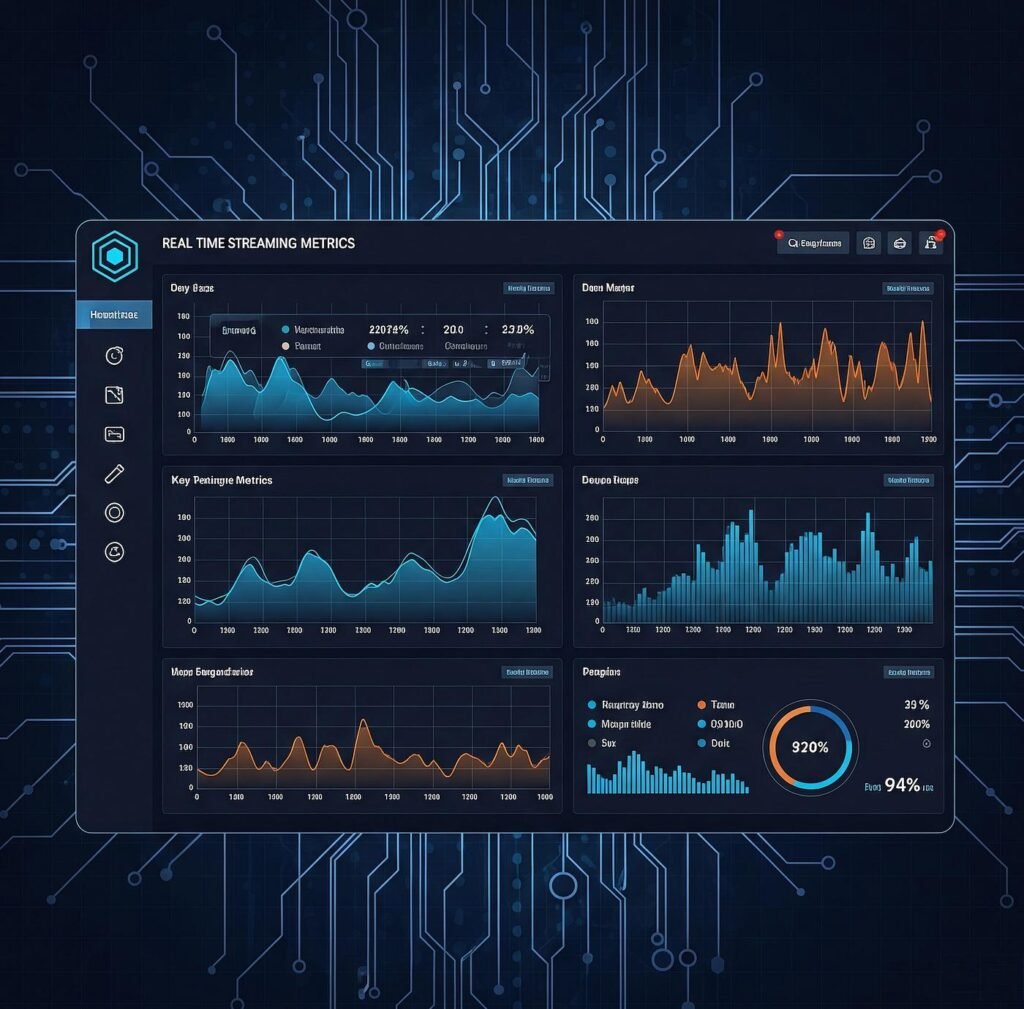
The results can appear in live dashboards, automated alerts, or business applications. Teams can use these insights to understand what is happening and decide whether action is required.
5. Decision-Making and Action
The final step is responding to the information. A business might notify a customer, investigate a suspicious transaction, adjust a delivery route, or schedule equipment maintenance.
When these stages work together effectively, organizations can respond to events without relying entirely on delayed reports.
Key Benefits of Real-Time Data Analytics
Faster and More Informed Decisions
Traditional reporting often depends on historical information. Real-time analytics provides a more current view of business activity, helping teams make decisions while situations are developing.
For example, a marketing team can monitor campaign engagement and identify underperforming advertisements before spending too much of its budget.
Better Customer Experiences
Understanding customer activity as it happens allows businesses to respond more effectively. An online platform may identify a sudden increase in support requests and allocate additional resources to help customers.
Personalized recommendations, timely notifications, and responsive customer service can also benefit from current data.
Improved Operational Efficiency
Real-time monitoring helps organizations understand how their systems, equipment, and processes are performing. Teams can identify delays, detect bottlenecks, and address developing issues before they affect larger operations.
Early Detection of Unusual Activity
Real-time analytics can help identify unexpected transactions, sudden traffic increases, unusual login behavior, and other changes that may require investigation.
However, detection systems are not always accurate. Organizations still need appropriate validation, security controls, and response procedures.
Greater Business Agility
Markets and customer expectations can change quickly. Businesses that receive timely information can adjust their plans more effectively instead of waiting for the next reporting cycle.
Real-World Applications of Real-Time Data Analytics
Real-time analytics is useful across many industries because decisions often depend on what is happening at the present moment.
Retail and E-Commerce
Online retailers can monitor product demand, customer journeys, payment activity, and inventory levels. When an item begins selling faster than expected, teams can respond by adjusting stock levels or coordinating replenishment.
Banking and Financial Services
Financial organizations can examine transactions as they occur and flag activity that differs from established patterns. This supports fraud detection, transaction monitoring, and risk management.
Healthcare
Healthcare organizations can use real-time information from monitoring equipment and connected systems to help clinical teams understand changing conditions. These applications require reliable systems, appropriate safeguards, and qualified professional oversight.
Manufacturing
Factories can analyze sensor readings, production speed, and equipment performance. If a machine begins operating outside its normal range, the system can alert maintenance staff so they can investigate the issue.
Transportation and Logistics
Transport companies can monitor vehicle locations, traffic conditions, delivery progress, and route changes. Current information can help dispatchers respond to delays and improve coordination.
Digital Marketing
Marketing teams can track website activity, advertising engagement, conversion events, and campaign performance. These insights help teams understand how audiences respond and make timely adjustments to their campaigns.
Technologies Behind Real-Time Data Analytics
Several technologies support real-time analytics, and the right combination depends on the organization’s needs.
- Data streaming platforms: Technologies such as Apache Kafka help move event data between systems.
- Stream processing engines: Apache Flink and similar tools process continuous data streams and support near-real-time analysis.
- Cloud data platforms: Cloud infrastructure can provide the computing and storage resources needed to process changing data volumes.
- Dashboards and visualization tools: These present current metrics, trends, and alerts in a format that teams can understand.
- Machine learning: Predictive and classification models can help detect patterns, estimate risks, or identify unusual behavior as new data arrives.
These technologies do not automatically guarantee instant results. Data quality, processing capacity, network delays, and system architecture all influence how quickly useful insights become available.
Challenges Businesses Should Consider
Although real-time analytics offers important advantages, implementing it requires careful planning.
Data Quality
Incorrect, incomplete, or duplicated records can produce misleading results. Businesses need validation processes and clear rules for handling inconsistent information.
Infrastructure Costs
Processing continuous streams may require additional computing resources, specialized tools, and technical expertise. Organizations should evaluate the expected benefits before choosing an expensive architecture.
Data Security and Privacy
Real-time systems may handle sensitive customer, financial, or operational information. Appropriate access controls, encryption, data retention policies, and privacy protections are essential.
Integration With Existing Systems
Connecting new analytics platforms to older databases and business applications can be complicated. Teams should plan how information will move between systems and how failures will be handled.
Too Many Alerts
Generating an alert for every small change can overwhelm employees. Businesses should establish meaningful thresholds and prioritize events that require attention.
Best Practices for Implementing Real-Time Data Analytics
Organizations can improve their chances of success by starting with a clear business objective rather than adopting technology without a defined purpose.
First, identify a specific problem, such as reducing payment fraud, improving delivery performance, or monitoring customer engagement. Next, determine which data sources are necessary and how quickly the information must be processed.
Choose tools that match the required scale, budget, and technical capabilities. Establish data quality checks, protect sensitive information, and create clear procedures for responding to alerts.
It is also important to measure the results. Businesses can track improvements in response time, error rates, customer satisfaction, operational downtime, or other relevant performance indicators.
Starting with a focused use case makes it easier to test the approach, learn from the results, and expand gradually.
The Future of Real-Time Data Analytics
Real-time analytics is becoming increasingly important as connected devices, digital platforms, and automated systems generate larger amounts of information. Advances in stream processing, cloud computing, and artificial intelligence are creating more opportunities to analyze events as they occur.
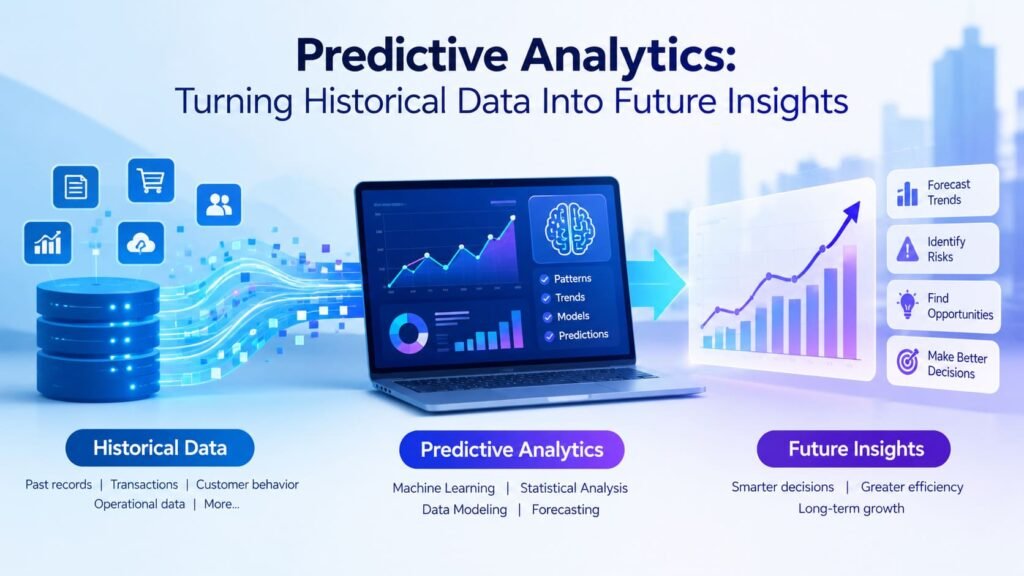
Businesses may increasingly combine live data with predictive models to estimate what could happen next. For example, a logistics company could use current traffic information alongside historical delivery patterns to anticipate delays.
However, successful adoption will depend on more than processing speed. Reliable data, transparent decision-making, privacy protection, and appropriate human oversight will remain essential.
Conclusion
Real-time data analytics helps organizations understand changing conditions and make decisions while information is still relevant. From monitoring customer activity to detecting unusual transactions and improving industrial operations, it supports faster responses and more informed business decisions.
The most effective approach is not necessarily to process every piece of data instantly. Instead, businesses should identify which events matter, determine how quickly they need to respond, and build systems that deliver reliable insights at the right time.
As data-driven operations continue to develop, real-time analytics will remain an important part of helping organizations respond to change with greater confidence and efficiency.
Frequently Asked Questions
1. What is real-time data analytics?
Real-time data analytics involves processing and analyzing data as it arrives, helping businesses make timely decisions using current information.
2. What are the benefits of real-time data analytics?
It helps businesses identify trends, improve operational efficiency, detect unusual activity, and respond quickly to changing conditions.
3. Which industries use real-time data analytics?
Banking, healthcare, retail, manufacturing, transportation, and digital marketing use real-time analytics to improve monitoring and decision-making.
4. Which tools are used for real-time data analytics?
Common tools include Apache Kafka, Apache Flink, cloud platforms, analytics dashboards, and machine learning technologies.