
In today’s digital world, information is constantly changing. Customer preferences shift, equipment performance fluctuates, online transactions happen within seconds, and unexpected problems can affect business operations at any moment. When organizations rely only on yesterday’s reports, they may miss opportunities or discover problems too late.
This is where real-time decision intelligence becomes valuable. It helps organizations combine current data, analytical insights, and business context to make informed decisions while events are still unfolding.
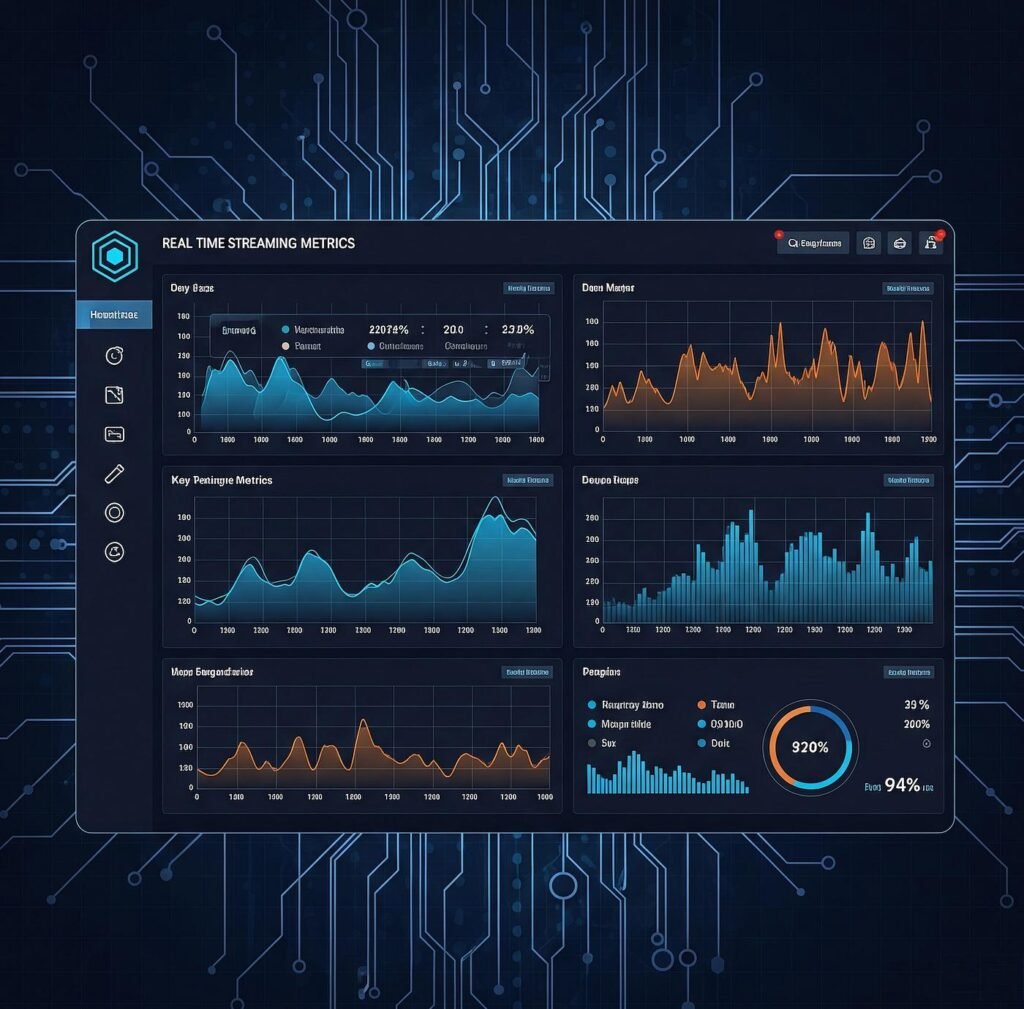
Instead of simply collecting information and reviewing it later, businesses can use live data to understand what is happening, identify potential risks, and decide what action to take next. The goal is not to make every decision faster at any cost. It is to make the right decision at the right time, using reliable information.
What Is Real-Time Decision Intelligence?
Real-time decision intelligence is an approach that connects live data, analytical methods, business rules, and sometimes artificial intelligence to support timely decisions.
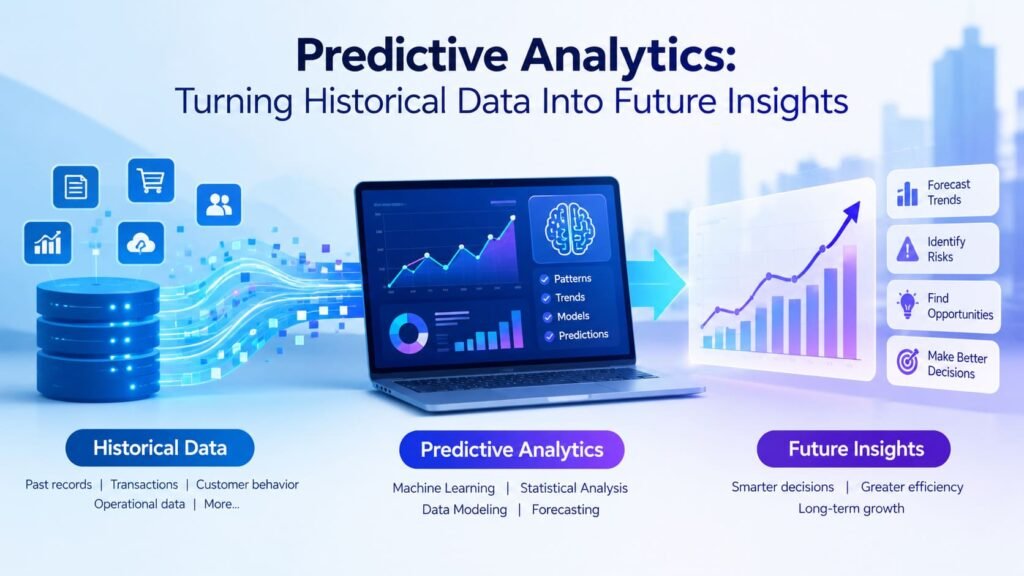
Traditional reporting often explains what happened in the past. Real-time analytics brings attention to what is happening now. Decision intelligence builds on those insights by helping people or automated systems determine what action may be appropriate.
For example, an online retailer may notice a sudden increase in orders for a popular product. A real-time monitoring system can identify the change, compare current demand with available inventory, and alert the operations team before stock runs out.
The technology does not replace human judgment in every situation. Instead, it gives decision-makers more relevant information when they need it.
How Real-Time Decision Intelligence Works
A real-time decision process typically involves several connected stages.
1. Collecting Live Data
The process begins with gathering information from sources such as websites, business applications, connected devices, transaction systems, customer interactions, and operational databases.
The quality of this information matters. If data arrives late, contains errors, or is incomplete, even an advanced analytical system may produce misleading results.
2. Processing and Analyzing Information
Once data arrives, analytical systems process it to identify changes, unusual patterns, and meaningful relationships. Depending on the use case, this may involve predefined rules, statistical analysis, machine learning, or predictive models.
For instance, a payment platform might analyze transaction patterns to identify activity that differs significantly from a customer’s normal behavior.
3. Understanding the Business Context
A data signal does not automatically explain what should happen next. Decision intelligence considers the organization’s goals, operating conditions, risk tolerance, and relevant business rules.
A sudden increase in website traffic, for example, may indicate growing customer interest. However, it could also result from automated bots or an unusual referral source. Understanding the context helps prevent unnecessary reactions.
4. Recommending or Taking Action
After analyzing the information, the system can notify a responsible team, recommend an action, or trigger an approved automated response.
A manufacturing system might alert technicians when a machine begins showing signs of abnormal performance. A fraud detection system might temporarily flag a suspicious transaction for additional verification.
Important or high-risk decisions should retain appropriate human oversight.
5. Measuring the Results
The process does not end when an action is taken. Organizations need to measure whether the decision achieved its intended outcome.
Did the alert prevent downtime? Did the inventory adjustment reduce missed sales? Did the fraud control reduce suspicious activity without blocking legitimate customers?
These results help organizations refine their rules, improve analytical models, and make future decisions more effective.
Why Real-Time Decision Intelligence Matters
Organizations generate large volumes of data, but having more information does not automatically lead to better decisions. The real advantage comes from identifying useful signals and acting on them before the opportunity disappears.
Key benefits include:
Faster Responses to Changing Conditions
Businesses can identify unexpected changes as they occur instead of waiting for scheduled reports. This is particularly useful when demand, transaction volumes, or operating conditions change quickly.
Better Operational Efficiency
Live information helps teams identify bottlenecks, equipment problems, and resource shortages earlier. Timely intervention can reduce unnecessary delays and improve the use of available resources.
Improved Customer Experiences
Organizations can respond to customer behavior more effectively. For example, an e-commerce platform may adjust product recommendations based on current browsing activity or notify support teams when service issues begin affecting customers.
Earlier Risk Detection
Real-time monitoring can reveal unusual transactions, network activity, or equipment behavior. Early alerts give teams an opportunity to investigate potential problems before they become more serious.
More Informed Business Planning
Although real-time intelligence focuses on immediate decisions, the information it generates can also reveal longer-term patterns. Managers can use these insights to evaluate strategies, identify recurring issues, and improve future planning.
Real-World Applications of Real-Time Decision Intelligence
The following examples illustrate how organizations can apply this approach in different industries.
1. Retail and E-Commerce
Retailers must balance customer demand, product availability, pricing, and delivery capacity. Real-time decision intelligence can help them monitor incoming orders, identify products experiencing sudden demand, and adjust inventory priorities.
For example, if a product begins selling faster than expected during a promotional campaign, the system can alert inventory managers to arrange replenishment or update product availability.
2. Banking and Financial Services
Financial institutions process transactions continuously, making timely risk assessment important. Real-time decision systems can evaluate transaction characteristics, compare them with established risk patterns, and flag suspicious activity for further investigation.
These systems should balance fraud prevention with customer convenience, since overly sensitive rules can interrupt legitimate payments.
3. Manufacturing and Industrial Operations
Factories use sensors and connected equipment to monitor temperature, vibration, pressure, and production output. When readings move outside expected ranges, a decision system can alert operators or recommend an inspection.
This approach can support predictive maintenance by helping teams identify potential equipment issues before an unexpected failure disrupts production.
4. Healthcare
Healthcare organizations can use real-time information to support operational coordination, monitor equipment availability, and identify changes in patient monitoring data.
Any clinical application must account for data accuracy, patient privacy, medical validation, and qualified professional oversight. Automated recommendations should not be treated as a substitute for appropriate clinical judgment.
5. Transportation and Logistics
Delivery networks constantly respond to traffic, weather, vehicle availability, and changing delivery priorities. Real-time decision intelligence can help dispatch teams compare routes, identify delays, and adjust delivery plans as conditions change.
This can improve coordination and help businesses communicate more accurate delivery estimates to customers.
The Role of Artificial Intelligence in Real-Time Decisions
Artificial intelligence can extend real-time decision intelligence beyond basic monitoring and predefined alerts.
Machine learning models can identify patterns in large datasets, estimate the likelihood of future events, and recognize changes that might otherwise go unnoticed. AI systems can also help prioritize alerts so that teams focus on the issues most likely to require attention.
Consider a company that operates hundreds of industrial machines. A conventional monitoring system might generate an alert whenever a sensor crosses a fixed threshold. An AI-based model could examine several sensor readings together and identify combinations of changes associated with potential equipment problems.
However, AI predictions are not always correct. Models can become less reliable when operating conditions change or when the data used to train them no longer reflects reality.
Organizations should therefore monitor model performance, validate important predictions, and establish clear procedures for reviewing uncertain or high-impact recommendations.
Real-Time Decision Intelligence vs. Traditional Business Intelligence
Both approaches help organizations understand their data, but they serve different purposes.
| Feature | Traditional Business Intelligence | Real-Time Decision Intelligence |
|---|---|---|
| Primary focus | Historical performance and reporting | Timely decisions using current information |
| Data timing | Often scheduled or periodically refreshed | Continuously updated when required |
| Main output | Reports, dashboards, and trends | Alerts, recommendations, and potential actions |
| Typical use | Monthly sales analysis | Responding to a sudden sales or inventory change |
| Human involvement | Analysts and managers interpret reports | People or automated systems respond to insights |
These approaches are complementary rather than competing alternatives. Historical reports provide valuable context, while real-time intelligence helps organizations respond to immediate developments.
Not every decision requires live data. For long-term budgeting, annual planning, or other decisions where conditions change slowly, periodic analysis may be more practical and cost-effective.
Challenges Businesses Need to Address
Despite its advantages, implementing real-time decision intelligence requires careful planning.
Data Quality and Consistency
Information from different systems may use inconsistent formats, contain duplicate records, or arrive with missing values. Organizations need reliable data validation and clear definitions for important metrics.
Integration With Existing Systems
Connecting databases, cloud applications, sensors, and operational software can be complicated. Poor integration may introduce delays or prevent decision-makers from seeing the complete picture.
Infrastructure and Operating Costs
Continuous data processing requires suitable infrastructure, monitoring, and maintenance. Businesses should identify where real-time processing creates measurable value before applying it across every workflow.
Privacy and Security
Live data may contain personal, financial, or confidential business information. Access controls, encryption, appropriate retention policies, and audit trails help reduce unnecessary exposure.
Alert Fatigue and Over-Automation
Too many alerts can overwhelm employees and make important warnings easier to miss. Organizations should prioritize notifications and define which actions can be automated safely.
Trust and Accountability
Employees need to understand why a system recommends a particular action and who is responsible for approving it. Clear explanations and escalation procedures are especially important when decisions carry significant financial, operational, or human consequences.
How to Implement Real-Time Decision Intelligence Successfully
Businesses do not need to transform every process at once. A focused implementation can provide a practical starting point.
1. Identify one important decision. Choose a recurring problem, such as detecting stock shortages, identifying payment anomalies, or preventing equipment downtime.
2. Define the required data. Determine which sources provide the information needed to support that decision and how frequently it must be updated.
3. Establish decision rules. Set clear thresholds, business priorities, and conditions for escalating an issue to a human decision-maker.
4. Choose suitable analytical technology. Depending on the use case, this could include event-stream processing, dashboards, statistical models, machine learning, or automated notification systems.
5. Test the process. Evaluate how the system performs under normal conditions, unusual events, incomplete data, and unexpected changes.
6. Measure business outcomes. Track indicators such as response time, avoided downtime, detection accuracy, operational costs, and the number of incorrect alerts.
7. Improve gradually. Use the results to refine the system before extending it to additional departments or decisions.
A successful implementation begins with a clear business need, not simply with the decision to adopt new technology.
The Future of Real-Time Decision Intelligence
Real-time decision intelligence is likely to become more closely connected with AI agents, edge computing, connected devices, and automated business workflows.
Edge computing can process certain information closer to where it is generated, reducing the need to send every reading to a central platform. AI agents may help coordinate multistep tasks, while improved data infrastructure can make current information more accessible to teams across an organization.
These developments will not eliminate the need for human judgment. Instead, they may allow employees to spend less time gathering information and more time evaluating priorities, managing exceptions, and considering the wider consequences of a decision.
The most effective systems will combine timely information with dependable data, transparent reasoning, appropriate safeguards, and clear accountability.
Conclusion
Real-time decision intelligence helps organizations move from simply observing data to using it in meaningful ways. By connecting live information with analytics, business context, and appropriate actions, companies can respond more effectively to changing conditions.
Its value depends on more than speed. Accurate information, relevant insights, reliable technology, and responsible decision-making are equally important.
For businesses exploring this approach, the best starting point is a decision where delays create a clear problem. By testing a focused use case and measuring its results, organizations can determine where real-time intelligence offers genuine value and how it can support better decisions over time.
As data continues to shape modern operations, the ability to turn timely information into well-informed action will remain an important part of effective data management and business strategy.
Frequently Asked Questions
1. What is real-time decision intelligence?
Real-time decision intelligence combines live data, analytics, business rules, and sometimes artificial intelligence to help organizations make informed decisions as situations change.
2. How does real-time decision intelligence help businesses?
It helps businesses identify emerging problems, respond to changing customer needs, improve operational efficiency, detect potential risks, and make decisions using current information.
3. What technologies support real-time decision intelligence?
Common technologies include real-time data analytics, event-stream processing, cloud computing, machine learning, connected sensors, and automated decision systems.
4. What challenges can businesses face when implementing real-time decision intelligence?
Businesses may face poor data quality, integration difficulties, infrastructure costs, privacy concerns, security risks, and excessive alerts. Proper planning and human oversight can help address these challenges.