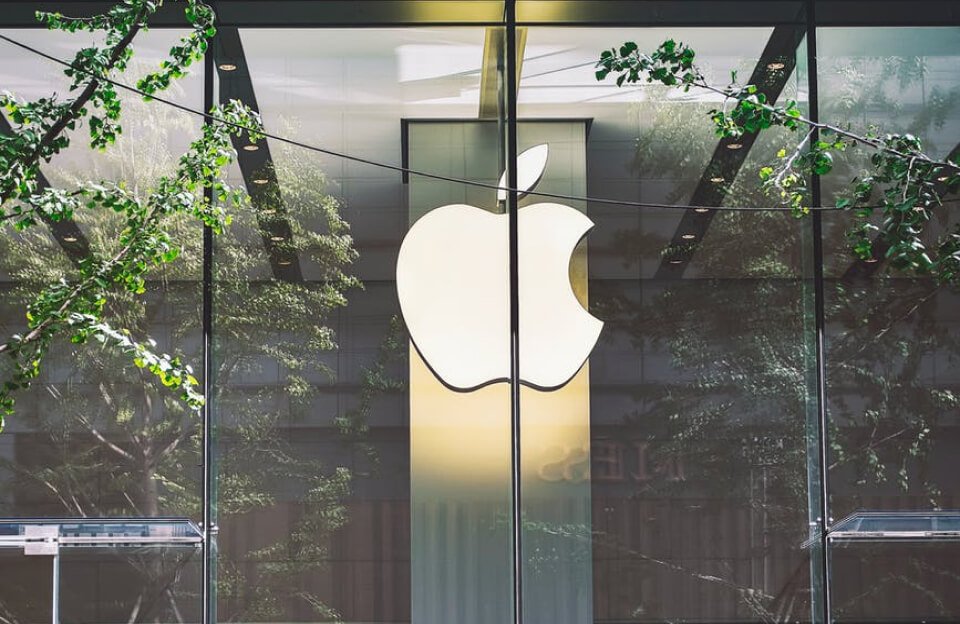
Apple has continued to invest heavily in the Chinese market, even as the company faced criticism in the United States over its approach to doing business in China. One of the clearest examples came with the opening of a significantly expanded Apple Store in Beijing’s Sanlitun shopping district.
The new store replaced Apple’s original Sanlitun location, which had been operating since 2008. The redesigned outlet was considerably larger and introduced several features associated with Apple’s newer approach to retail, including spaces for customer sessions, product demonstrations and community activities.
On the surface, the opening looked like a straightforward retail expansion. Apple was giving customers a bigger place to explore its products and strengthening its presence in one of China’s most important cities.
But the timing made the event more significant.
Around the same period, then-U.S. Attorney General William Barr publicly criticized major American technology companies for their relationship with China. Apple was among the companies discussed, particularly in relation to decisions involving applications and services available to Chinese users.
That created an interesting contrast. While one side of the story focused on Apple’s continued investment in China, the other focused on the political and regulatory challenges that came with operating there.
Apple’s Long Relationship With China
China has been an important part of Apple’s business for many years. The relationship is much deeper than simply selling iPhones to Chinese customers.
China has been a major manufacturing and supply-chain center for Apple, while also representing one of the world’s largest consumer markets. Millions of people in the country use Apple products, making China an important part of the company’s international strategy.
Because of this, Apple cannot easily separate its retail operations from the broader business environment.
When Apple opens a major store in Beijing, it is not only creating another location where customers can purchase products. It is also reinforcing the company’s presence in a market that plays an important role in its global operations.
The Sanlitun expansion therefore attracted attention beyond the retail industry.
A New Chapter for the Sanlitun Store
Apple’s original Sanlitun store opened in 2008. At the time, it represented an important step for Apple as the company expanded its retail footprint in China.
Over the years, the area around Sanlitun became one of Beijing’s major shopping and entertainment destinations. The Apple Store became a recognizable part of that environment.
As Apple’s business grew, the original store eventually became too limited for the company’s evolving retail strategy.
The new location provided substantially more space and was designed around Apple’s modern retail philosophy. Instead of focusing only on product sales, Apple stores increasingly became places where customers could learn, receive support and interact with the brand.
This approach was visible in the redesigned Sanlitun location.
The store included spaces intended for educational sessions and product demonstrations. These areas allowed Apple to build a stronger relationship with customers rather than treating the retail experience as a simple transaction.
The Importance of the Chinese Consumer Market
China’s enormous consumer market has long attracted global technology companies.
For Apple, the country has been especially important because Chinese consumers have shown strong interest in premium smartphones, computers, tablets and other consumer electronics.
The iPhone has faced intense competition in China, however. Domestic manufacturers have developed powerful devices and built strong relationships with local customers.
Companies such as Huawei have become major competitors in the Chinese smartphone market. Other domestic brands have also competed aggressively on price, features, camera technology and innovation.
Apple therefore has to work hard to maintain its position.
A physical retail network can help with that effort because customers can directly experience Apple’s products and receive assistance from employees.
Why Physical Stores Still Matter
Technology companies have increasingly moved toward online sales, but Apple has continued to place considerable value on physical stores.
There is a simple reason for this.
A customer considering an expensive device may want to hold it, compare different models, test the display, examine the camera or speak with an employee before making a decision.
An Apple Store provides that opportunity.
The retail environment also allows Apple to control how its products are presented. Everything from product placement to lighting and customer support contributes to the overall brand experience.
In a major city such as Beijing, a large flagship-style location can therefore serve both commercial and branding purposes.
The Sanlitun expansion reflected this strategy.
A Focus on Renewable Energy
The new store also received attention for its environmental design.
Apple highlighted an integrated solar installation associated with the retail location. The company had been increasing its focus on renewable energy and reducing the environmental impact of its operations.
Environmental initiatives had become an increasingly visible part of Apple’s corporate strategy.
For a company with a large global supply chain and thousands of retail and corporate facilities, reducing energy consumption and increasing the use of renewable power can have a meaningful impact.
Including sustainability features in a high-profile retail location also sends a message to customers.
The store becomes an example of how Apple wants its physical spaces to reflect its broader environmental goals.
William Barr’s Criticism of Apple
The store expansion took place against a very different backdrop in the United States.
William Barr, who served as U.S. attorney general during the Trump administration, publicly discussed the influence of China on American businesses and technology companies.
Barr argued that some major American companies were becoming too willing to accommodate Chinese government policies in order to maintain access to the country’s large market.
Apple was one of the companies he mentioned.
His criticism included Apple’s handling of applications on its Chinese App Store. The issue was part of a wider debate about how American technology companies should respond when the laws and regulations of a foreign market conflict with expectations in the United States.
The criticism raised questions that went beyond Apple itself.
The Difficult Balance Between Business and Regulation
Multinational companies operate under different legal systems.
A company that wants to sell products or provide digital services in a particular country generally has to follow that country’s laws. At the same time, the company may have commitments, policies and customers in other parts of the world.
That can create difficult situations.
Apple’s experience in China illustrates this problem particularly well.
If Apple refuses to follow local requirements, it could face restrictions on its ability to operate in the market. If it follows those requirements, critics in other countries may argue that the company is compromising its principles.
There is rarely a simple answer.
Businesses have to consider the practical consequences of every decision, including market access, customer relationships, legal obligations and reputation.
Apple’s Position Was Complicated
It is easy to view the issue as a simple disagreement between Apple and the U.S. government, but the reality was more complicated.
Apple had millions of customers in China and a significant business relationship with the country. China was also deeply connected to Apple’s global supply chain.
Walking away from such a market would have major consequences.
At the same time, Apple operates under intense scrutiny because of the size and influence of the company. Decisions about its products, services, privacy policies and relationships with governments can attract worldwide attention.
That means Apple has to navigate competing expectations from different groups.
Consumers may want access to services and applications. Governments may demand regulatory compliance. Investors may expect business growth. Employees may care about corporate values.
All of these pressures can influence corporate decisions.
The App Store Adds Another Layer
Apple’s App Store is especially important in this discussion because the company controls which applications are available through its platform.
In different countries, applications can face different legal requirements.
An application that is available in one country may not necessarily be available in another. Apple has to consider local laws and regulations when operating its digital marketplace.
This creates a challenging situation for a global company.
From a business perspective, compliance can help Apple continue operating in important markets. From a public-policy perspective, however, restrictions on applications can raise concerns about access to information and freedom of expression.
These competing perspectives helped fuel criticism of Apple’s operations in China.
Retail Expansion During Political Pressure
The timing of the Sanlitun store opening made the situation particularly interesting.
Apple was not pulling back from China. Instead, it was investing in a larger physical presence.
That decision suggested that the company continued to see long-term value in the Chinese market despite the political criticism surrounding its operations.
The new store could help Apple maintain visibility among Chinese consumers and provide a modern environment for customers to experience its products.
In other words, the retail expansion reflected Apple’s business priorities, while Barr’s criticism reflected a political debate about those same international business relationships.
Both were happening at the same time.
Competition in China’s Technology Market
Apple’s position in China has always involved intense competition.
Chinese smartphone manufacturers have developed devices with advanced cameras, powerful processors and attractive designs. Many companies also compete aggressively on price.
Local brands can have another advantage: they understand the preferences of Chinese consumers and operate within the domestic market.
Apple therefore has to differentiate itself through its ecosystem, design, software experience, brand reputation and customer service.
Retail stores are one part of that strategy.
By giving customers a direct Apple experience, the company can demonstrate why its products may be worth choosing even when cheaper alternatives are available.
The Role of Brand Experience
Apple has traditionally placed a strong emphasis on the experience surrounding its products.
The company’s stores are designed to feel open and accessible. Customers can try products without necessarily feeling pressured to purchase something immediately.
That philosophy became increasingly important as Apple’s product ecosystem expanded.
Someone visiting an Apple Store may be interested in an iPhone but could also discover an iPad, Mac, Apple Watch or another product. Employees can explain how those devices work together.
The physical store therefore becomes part of Apple’s larger ecosystem strategy.
The Sanlitun location was well suited to this approach because of its prominent position in one of Beijing’s major commercial areas.
Why the Story Matters Beyond Apple
The situation involving Apple and China illustrates a much larger issue in the global technology industry.
Technology companies today operate across borders. Their products and services can reach users in dozens or even hundreds of countries.
However, there is no single global regulatory system.
Every country can have different laws involving data, privacy, online content, applications, cybersecurity and digital services.
Companies must adapt accordingly.
That can produce conflicts between commercial objectives and political expectations.
Apple is one of the most visible examples because of its size, but similar questions affect many other multinational technology companies.
Global Companies Face Increasing Pressure
As technology becomes more closely connected with politics and national security, large companies face greater scrutiny.
Governments increasingly view technology platforms as strategically important. Issues such as data storage, cybersecurity, artificial intelligence, telecommunications and digital information can all become matters of national interest.
This means companies can no longer treat international expansion as simply a matter of opening offices and selling products.
They must understand local laws and political environments while also considering how their decisions will be viewed internationally.
Apple’s experience in China provides a useful example of that challenge.
What the Sanlitun Store Represented
The new Sanlitun store represented Apple’s confidence in the Chinese consumer market.
Its larger size and updated design showed that Apple wanted to remain a visible part of Beijing’s technology and retail landscape.
The store also reflected Apple’s effort to create a more interactive relationship with customers.
People could visit not only to purchase a device but also to learn about Apple’s products, receive support and participate in educational activities.
That made the store an important part of Apple’s broader retail strategy.
Business Growth and Political Questions Can Exist Together
One of the most interesting aspects of the story is that Apple’s business expansion and political criticism were not mutually exclusive.
A company can face criticism from a government while continuing to invest in the same market that is at the center of the debate.
For Apple, China was simply too important to treat as an ordinary overseas market.
The company’s manufacturing relationships, consumer base and retail operations were all connected to the country.
As a result, Apple’s approach had to be based on long-term business considerations as well as short-term political developments.
Lessons for Technology Businesses
There are several lessons that other technology companies can take from Apple’s experience.
First, international growth requires a strong understanding of local regulations.
Second, entering a major market can create difficult choices when local rules differ from the company’s expectations or policies elsewhere.
Third, reputation matters. A decision that makes sense commercially can still attract criticism from customers, governments or advocacy groups.
Finally, technology companies need to think carefully about how their products and services interact with different legal and political environments.
These challenges are likely to become even more important as technology becomes a larger part of everyday life.
Looking at Apple’s China Strategy
Apple’s continued presence in China demonstrates the company’s long-term interest in the market.
Even when political tensions increase, China remains an important part of Apple’s global business. The company’s retail expansion showed that it was still willing to invest in its customer experience and brand presence there.
At the same time, criticism from U.S. officials demonstrated that Apple’s decisions in China could have consequences far beyond the country’s borders.
This is one of the realities of operating as a global technology company.
A decision made for one market can quickly become part of an international discussion.
Final Thoughts
Apple’s expansion of its Sanlitun store in Beijing was more than a retail story. It reflected the company’s continued commitment to one of its most important international markets.
The larger store offered customers a modern environment to explore Apple’s products, receive support and participate in educational activities. Its sustainability features also reflected Apple’s broader focus on renewable energy and environmentally responsible operations.
But the timing of the expansion made the story more complicated.
William Barr’s criticism of Apple highlighted concerns about how American technology companies operate in China and how they respond to local government requirements. Those concerns became part of a much wider debate about business, technology, regulation and international politics.
Apple’s experience shows that global technology companies often have to operate in a difficult middle ground. They must pursue growth while complying with local laws, protecting their reputation and responding to expectations from customers and governments around the world.
For Apple, China remained an important opportunity despite the challenges. The Sanlitun store was a visible sign of that commitment and a reminder of how closely business strategy and global politics can become connected in the technology industry.
Frequently Asked Questions
1. Why did Apple open another large store in China?
Apple opened the expanded Sanlitun store in Beijing to strengthen its retail presence and provide Chinese customers with a larger, more modern space to explore its products and services.
2. What did William Barr criticize Apple for?
William Barr criticized Apple over aspects of its business operations in China, including its handling of applications on the Chinese App Store and its approach to Chinese regulatory requirements.
3. Why is China an important market for Apple?
China is important to Apple because it has a large consumer market and has also played a major role in Apple’s global manufacturing and supply chain.
4. What made the new Apple Sanlitun store different?
The redesigned store was much larger than the original location and included modern customer areas, spaces for educational sessions, and renewable-energy features.