
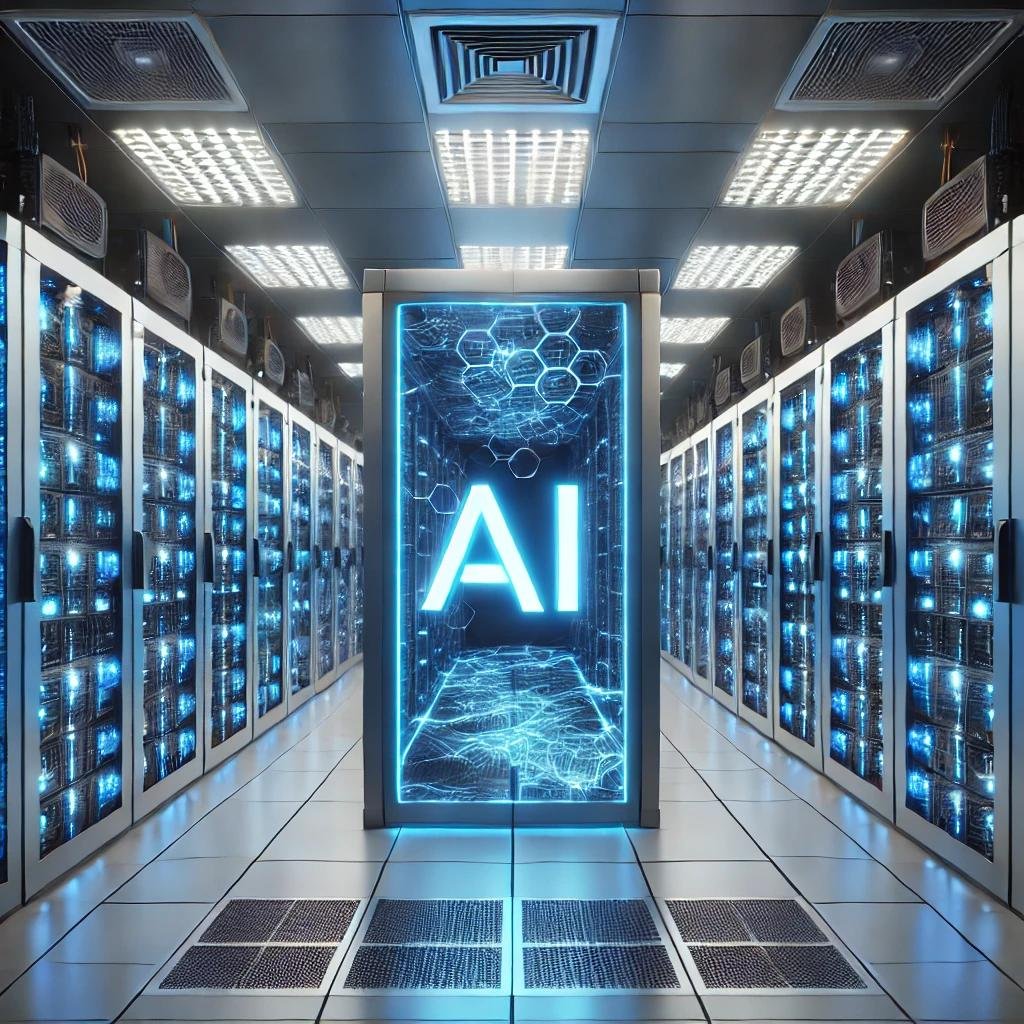
Artificial intelligence has become a natural part of everyday life. People use AI to write emails, summarize reports, solve problems, generate images, research topics, and learn new skills. Asking an AI assistant a question may feel like a simple digital activity, but behind every response is a network of computers, data centers, cooling systems, and electricity infrastructure.
This raises an important question: What does it actually cost the environment when we ask AI a question?
The answer is more complicated than many people realize. A short text prompt generally requires far less computing power than generating a detailed video or completing a complex reasoning task. However, when millions of people use AI throughout the day, the combined demand for computing resources becomes significant.
Understanding this hidden environmental cost does not mean we should stop using artificial intelligence. Instead, it helps us recognize the resources behind digital convenience and encourages technology companies, governments, and users to make more responsible choices.
How Does an AI Question Use Energy?
When you submit a question to an AI chatbot, the request is processed by specialized computer chips, often located in large data centers. These facilities contain servers that perform calculations, retrieve information, and generate responses.
Unlike a traditional search that primarily retrieves and ranks existing web pages, a generative AI system calculates a response based on its training and the context of your request. The amount of computing required depends on the model, the length of the input, the response, and the type of task.
A simple question such as asking for a definition usually requires less processing than requesting a detailed research report, generating an image, or producing a video.
The environmental impact also extends beyond the moment you press Enter. AI models must first be trained, their hardware must be manufactured, and the data centers running them need electricity, cooling, maintenance, and physical infrastructure.
According to the International Energy Agency’s 2026 analysis, electricity consumption from data centers increased by 17% in 2025, while consumption from AI-focused data centers grew even faster. The agency also notes that improving efficiency per task does not automatically eliminate the environmental consequences of growing AI use.
The Three Major Environmental Costs of AI
1. Electricity Consumption and Carbon Emissions
Electricity is one of the most visible parts of AI’s environmental footprint. Data centers power thousands of processors, storage systems, networking equipment, and supporting infrastructure. Many AI workloads require powerful accelerators that can consume substantial amounts of electricity.
The climate impact depends partly on how that electricity is generated. A data center powered by a carbon-intensive electricity grid generally produces more associated emissions than one using low-carbon electricity.
The International Energy Agency estimated that data centers consumed around 415 terawatt-hours of electricity worldwide in 2024, equivalent to approximately 1.5% of global electricity consumption. Its 2025 Energy and AI report projected that total data center electricity use could reach around 945 terawatt-hours by 2030 under its base-case scenario.
These figures cover data centers as a whole, not AI alone. They also represent a projection rather than a guaranteed future outcome.
As AI becomes part of office software, customer support, education, scientific research, and online search, electricity demand will depend on both improvements in computing efficiency and the number and complexity of tasks people perform.
2. Water Used for Cooling
Water is another important but less visible part of the AI equation.
Powerful computer chips generate heat while processing information. Data centers must control that heat to keep equipment operating safely and reliably. Depending on the facility, cooling may involve air systems, chilled water, cooling towers, or liquid-cooling technologies.
Some cooling methods consume water directly through evaporation. Water may also be used indirectly when generating the electricity that powers a facility. Manufacturing semiconductors and other electronic components can require water as well.
The total impact varies significantly by location, climate, cooling technology, electricity source, and facility design. This is why a single universal figure for the water used by every AI question can be misleading.
The issue becomes especially important when data centers operate in areas that already experience water shortages. A facility’s demand may compete with local needs for drinking water, agriculture, industry, and ecosystem protection.
Responsible AI infrastructure should therefore consider not only how much water a data center uses, but also where that water comes from and whether local supplies can support the demand.
3. Electronic Waste and Hardware Manufacturing
AI depends on physical equipment, including advanced processors, servers, storage devices, networking components, and power systems.
Manufacturing these products requires raw materials, energy, water, transportation, and industrial processing. Some electronic components also rely on minerals that must be extracted and refined.
As AI hardware advances, companies may replace or upgrade equipment to improve performance and reduce operating costs. Discarded equipment can contribute to electronic waste if it is not reused, refurbished, or recycled responsibly.
Electronic waste is more than a disposal problem. Poorly managed equipment can release hazardous substances, while valuable materials may be lost instead of recovered.
Extending hardware life where practical, repairing equipment, reusing components, and developing better recycling systems can help reduce these impacts. Manufacturers and data center operators also have a role in designing equipment that is more durable and easier to recover at the end of its useful life.
Does Every AI Question Have the Same Environmental Impact?
No. This is one of the most important distinctions in the discussion.
The resources needed for an AI task depend on several factors, including the model being used, the computing hardware, the length of the prompt, the amount of generated content, and the complexity of the task.
For example, a brief text response may require relatively little computation. A request to analyze a large collection of documents, generate several high-resolution images, or create a long video may require substantially more.
Some advanced reasoning tasks also involve additional processing before a final answer is produced.
The International Energy Agency’s 2026 analysis highlights this difference: energy use per AI task has been falling rapidly as hardware and software improve, while more demanding applications and increasing overall usage can push total electricity consumption upward.
This creates a challenge for measuring AI sustainability. Looking only at the energy used for one prompt does not reveal the full impact of training models, manufacturing hardware, constructing data centers, or running millions of requests every day.
A meaningful assessment must examine both the impact of individual tasks and the total resources consumed across the AI industry.
Why the Growth of AI Data Centers Matters
The popularity of AI is encouraging technology companies to expand their computing infrastructure. New data centers require land, electrical connections, cooling systems, backup power, and reliable access to energy.
These facilities can support innovation, scientific research, business productivity, and digital services. However, their rapid expansion can also create pressure on local electricity grids, water supplies, and surrounding communities.
In India, the discussion is particularly relevant as interest in AI infrastructure and data center investment grows. The environmental consequences depend on where facilities are built, how they are cooled, the energy sources they use, and how carefully local resources are managed.
A data center built in a water-stressed region may raise different concerns from one located in an area with more reliable water availability. Similarly, adding a large computing facility to a grid that depends heavily on fossil fuels may create a different emissions profile from one supported by cleaner electricity.
Planning decisions matter. Environmental assessments, transparent reporting, efficient cooling, responsible water management, and investment in clean power can help reduce the risks associated with expanding AI infrastructure.
Can Artificial Intelligence Help Protect the Environment?
Although AI consumes resources, it can also help address environmental problems when applied effectively.
Researchers and businesses are exploring AI systems that can forecast electricity demand, improve renewable energy integration, identify equipment faults, detect deforestation, monitor wildlife, and optimize industrial processes.
In agriculture, AI-supported analysis can help farmers make more informed decisions about irrigation and crop management. In buildings, predictive systems can help control heating, cooling, and electricity use. In scientific research, machine learning can help analyze large datasets that would otherwise take considerable time to process.
These benefits are not automatic. An AI system must deliver a useful result, and the resources it consumes should be considered alongside the environmental savings it may enable.
For example, an AI system that helps a factory reduce energy waste may offer meaningful benefits. A system that consumes considerable computing power without improving an outcome may provide little environmental value.
The goal should not simply be to deploy more AI. It should be to use AI where its benefits justify its costs and to measure those benefits wherever possible.
How Can We Reduce the Environmental Cost of Everyday AI Use?
Individual users cannot control the entire AI supply chain, but they can make more thoughtful choices about how they use these systems.
Ask Clear and Specific Questions
A well-written prompt can reduce unnecessary back-and-forth. Explain what you need, provide relevant context, and specify the format of the answer. This can help you obtain a useful response without repeatedly regenerating content.
Choose the Right Tool for the Task
Not every problem requires the most advanced AI model. A basic search, calculator, spreadsheet, or conventional software tool may be sufficient for simple tasks. Use more computationally intensive features when they provide a meaningful advantage.
Avoid Unnecessary Regeneration
Review your instructions before submitting a request. If the answer is close to what you need, ask for a focused correction instead of repeatedly requesting a completely new response.
Use Image and Video Generation Thoughtfully
Generated media can require more processing than a simple text exchange. Before creating multiple versions, decide what you want the final result to look like and request only the variations that serve a purpose.
Support Transparent and Responsible AI Providers
Users, businesses, and policymakers can encourage providers to disclose relevant information about electricity consumption, water use, emissions, and infrastructure efficiency. Better transparency makes it easier to compare environmental performance and identify opportunities for improvement.
Individual actions are helpful, but the largest improvements also require efficient hardware, cleaner electricity, responsible data center design, better cooling methods, and stronger environmental reporting.
What Technology Companies Should Do Next
Technology companies have greater control over the infrastructure behind AI and therefore carry substantial responsibility for reducing its environmental impact.
First, companies can improve the efficiency of AI models and the hardware used to run them. More efficient software and processors can reduce the resources required to complete a task.
Second, operators can increase the use of low-carbon electricity while considering the availability, reliability, and timing of clean power. Renewable energy claims should be evaluated carefully rather than treated as proof that every data center operation is emissions-free.
Third, providers should measure water use and consider local water stress when choosing sites and cooling systems. Reusing water where appropriate and selecting suitable cooling technologies can help reduce pressure on freshwater resources.
Finally, businesses should report environmental performance clearly and consistently. Useful reporting distinguishes direct facility water consumption from indirect water use, and AI-specific impacts from the wider footprint of general-purpose data centers.
There is no single solution. Progress requires cooperation among technology companies, hardware manufacturers, energy providers, governments, researchers, and the communities hosting these facilities.
The Future of AI Must Include Environmental Responsibility
Artificial intelligence is likely to become more deeply integrated into everyday life. It may help people work faster, discover new knowledge, improve services, and solve complex problems. At the same time, its expansion will continue to depend on physical infrastructure and natural resources.
The encouraging news is that efficiency is improving, and new approaches to data center design and energy management are emerging. The challenge is ensuring that these improvements keep pace with growing demand.
The environmental cost of an AI question is not a fixed number, and it should not be exaggerated or dismissed. A single short text exchange may have a small footprint, but the combined impact of billions of tasks, large-scale infrastructure, and frequent hardware upgrades deserves serious attention.
The most responsible path forward is to make AI more efficient, power it more sustainably, manage water carefully, extend hardware life, and demand better environmental information from providers.
Frequently Asked Questions
1. Does asking an AI question harm the environment?
AI questions use computing resources and electricity, which can contribute to carbon emissions and water consumption. The actual impact depends on the AI model, task, and energy source.
2. Why do AI data centers consume water?
Some data centers use water-based cooling systems to control the heat generated by powerful computer processors. Water may also be consumed indirectly during electricity generation and hardware manufacturing.
3. Is artificial intelligence becoming more energy-efficient?
Yes. Advances in computer chips, AI models, and software are improving efficiency. However, increasing usage and more complex AI tasks can still increase total energy demand.
4. How can people reduce the environmental impact of AI?
People can write clear prompts, avoid unnecessary repeated requests, and choose appropriate tools for each task. AI providers can also reduce their impact through efficient infrastructure and cleaner energy.