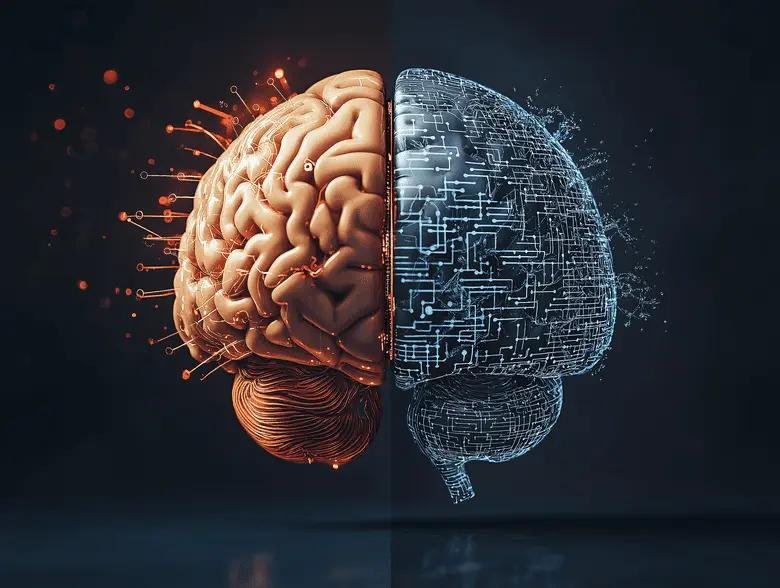
Imagine being able to create a virtual version of your brain that scientists could study on a computer. Researchers might use this model to understand how brain networks work, explore neurological conditions, and investigate potential treatments without relying entirely on experiments involving real people.
This idea is known as a digital twin of the human brain. It involves creating a computer-based representation of an individual’s brain using information such as medical scans, neural activity, and computational models.
Although the concept sounds futuristic, researchers are already developing technologies that can simulate selected aspects of brain structure and function. However, building a complete digital copy of the human brain remains a major scientific challenge.
The brain is incredibly complex. It contains billions of neurons, constantly changing connections, and biological processes that scientists are still working to understand. Creating an accurate digital twin will require advances in neuroscience, artificial intelligence, medical imaging, and computing.
What Is a Digital Twin of the Human Brain?
A digital twin is a virtual representation of a real-world system. Engineers use digital twins to study how machines, buildings, and industrial systems behave under different conditions. Scientists are exploring whether similar methods can help them understand the human brain.
A digital brain twin would combine information about an individual’s brain structure with computational models of its activity. Instead of simply displaying a three-dimensional brain image, it would aim to reproduce selected biological processes and patterns of neural communication.
Scientists may use several types of information to build these models:
- Brain imaging: MRI and other imaging techniques help researchers examine brain anatomy and connections.
- Neural activity: EEG and functional MRI provide information about selected patterns of brain activity.
- Computational modeling: Mathematical models simulate interactions between neurons and brain networks.
- Artificial intelligence: AI methods can help identify patterns in complex datasets and support the development of predictive models.
The purpose is to create a model that can help scientists investigate how a particular brain functions. Its accuracy depends on the quality of the available data, the assumptions used in the simulation, and how thoroughly the results are tested.
How Are Scientists Building Digital Brain Twins?
Developing a digital twin involves several connected stages. Researchers must collect brain data, reconstruct relevant structures, simulate biological activity, and compare the results with real observations.
1. Collecting Brain Data
The first step is to gather information about the brain being studied. Magnetic resonance imaging can reveal anatomical structures, while diffusion MRI helps researchers estimate connections between different brain regions.
Other techniques, including electroencephalography, can provide information about electrical activity. Combining these measurements allows scientists to investigate different aspects of brain function.
However, no single technology captures everything happening inside the brain. Researchers must work with incomplete measurements and determine which information is most useful for their particular research question.
2. Mapping Neural Connections
The brain operates through networks of interconnected neurons and regions. These networks support processes such as memory, attention, movement, language, and decision-making.
Scientists use imaging data and computational techniques to estimate how different brain regions connect and interact. These maps can form the structural foundation of a digital brain model.
Nevertheless, identifying a connection does not automatically reveal how information travels through it or how that connection contributes to a particular behavior. Researchers must test their models against experimental evidence.
3. Using AI and Computational Models
Artificial intelligence can help researchers analyze large volumes of neurological data and identify patterns that might be difficult to detect manually.
Computational models can then use this information to simulate selected aspects of neural activity. For example, researchers might investigate how changes in one network influence activity elsewhere in the brain.
AI is an important tool in this process, but it cannot independently solve every problem in neuroscience. A model may reproduce certain patterns without accurately representing the biological mechanisms that produce them.
4. Testing the Model Against Real Brain Activity
A digital twin must be evaluated against actual measurements. Researchers compare the simulated results with observed brain activity to determine whether the model represents the system accurately.
If the results differ, scientists may adjust the model and conduct additional experiments. Independent testing is particularly important because a simulation that matches its original training data may still make unreliable predictions about new situations.
Research reported in 2026 has explored methods for combining anatomical reconstruction and biophysical modeling with neural recordings to create more personalized brain simulations. These approaches represent progress toward digital brain twins, but they do not demonstrate that a complete human brain can already be reproduced digitally.
Potential Applications of Digital Brain Twins
Digital brain twins could eventually provide new ways to investigate neurological processes and individual differences in brain function. Their potential applications are attracting interest across neuroscience and medical research.
Understanding Neurological Conditions
Neurological conditions can affect brain networks differently from one person to another. Personalized computational models could help researchers explore these differences and investigate the mechanisms associated with particular symptoms.
Potential research areas include epilepsy, stroke, Alzheimer’s disease, and other conditions that affect brain function.
A digital twin might help researchers test hypotheses about how changes in specific neural networks relate to a condition. However, such models must be validated before they can be relied upon for diagnosis or clinical decision-making.
Exploring Potential Treatments
Researchers could eventually use digital brain models to investigate how selected changes in neural activity might affect a person’s brain networks.
For example, simulations might help compare different research scenarios before scientists decide which ones deserve further experimental investigation.
This approach could make certain stages of research more efficient. However, a simulated treatment response is not proof that the same treatment will work in a real patient. Clinical testing would remain essential.
Improving Neuroscience Research
The human brain contains many interacting systems that are difficult to study independently. Computational models provide a controlled environment in which researchers can change parameters and investigate possible outcomes.
Scientists can use these simulations to generate hypotheses, examine relationships between brain regions, and identify questions that require additional experiments.
As models improve, they may become valuable tools for studying complex neural processes that cannot be fully understood through isolated measurements alone.
Supporting Personalized Medicine
People with the same neurological diagnosis may have different symptoms, medical histories, and treatment responses.
In the future, digital brain twins might help researchers investigate why these differences occur. By combining individual brain data with validated computational models, scientists could explore whether particular patterns are associated with different outcomes.
This remains an emerging research direction rather than a routine medical service. Its success will depend on demonstrating that personalized models provide reliable information beyond existing clinical methods.
Why Is Building a Digital Twin of the Human Brain So Difficult?
Despite improvements in AI and medical imaging, creating an accurate digital brain presents several major challenges.
The Brain Is Extremely Complex
The human brain contains approximately 86 billion neurons, along with other cells that support its function. These neurons communicate through complex networks involving electrical signals and chemical processes.
A model that represents activity across large brain regions may overlook details at the cellular level. Similarly, a detailed simulation of a small neural circuit cannot automatically explain how the entire brain works.
Bringing these different levels of biological organization together remains a significant challenge.
Brain Activity Changes Constantly
The brain is not a static structure. Learning, sleep, aging, stress, and everyday experiences can influence neural activity and connections.
A digital twin intended to represent an individual’s brain over time would therefore need suitable measurements and methods for updating its predictions.
Scientists must also distinguish meaningful biological changes from normal variation and measurement errors.
Available Data Is Incomplete
Brain imaging and neural recordings reveal valuable information, but they cannot capture every process occurring inside the brain.
Different technologies measure different aspects of neural activity. Combining their results into a single model can introduce uncertainty, particularly when the measurements have different levels of detail or are collected at different times.
These limitations make it difficult to determine whether a simulation accurately represents the underlying biology.
Computing Power and Scientific Validation
Highly detailed simulations can require substantial computing resources. Increasing the complexity of a model may also make it harder to calibrate, interpret, and test.
Researchers must balance biological detail with practical usefulness. More importantly, they must establish whether a model can make accurate predictions about observations that were not used to develop it.
Without reliable validation, even an impressive digital representation could produce misleading results.
Can a Digital Brain Reproduce Human Thoughts and Consciousness?
One of the most intriguing questions is whether a digital brain twin could eventually reproduce human thoughts, memories, emotions, or consciousness.
Scientists can already model selected neural processes and investigate relationships between brain activity and cognitive functions. However, reproducing a pattern of neural activity is not the same as recreating a person’s subjective experience.
Consciousness remains an area of active scientific investigation. Researchers do not yet have a complete explanation of how subjective experiences arise from biological processes.
For this reason, it would be premature to claim that a digital brain simulation could reproduce a person’s complete identity or become conscious simply because it accurately models some aspects of brain function.
Future research may improve our understanding of these questions, but they remain unresolved.
Privacy and Ethical Concerns
Personalized brain models could involve highly sensitive information about an individual’s neurological characteristics and health. Protecting this information will be essential as the technology develops.
Several issues require careful consideration:
- Data privacy: Brain scans and neural recordings must be protected against unauthorized access.
- Informed consent: Participants should understand how their information may be used in research.
- Model accuracy: Incomplete or unrepresentative datasets could produce unreliable results for certain populations.
- Medical responsibility: Researchers and healthcare professionals must understand the limitations of predictions before using them to inform treatment decisions.
Responsible development will require clear standards for data protection, transparency, scientific validation, and the appropriate use of personalized brain models.
What Is the Future of Digital Brain Twins?
Digital brain research is gradually moving toward more personalized computational simulations. Scientists are combining brain imaging, neural recordings, mathematical models, and AI-assisted analysis to represent selected aspects of individual brain function.
Research in 2026 reflects continued interest in using these approaches to investigate neurological mechanisms and explore potential applications in precision medicine. Nevertheless, important limitations remain, including incomplete biological information, computational demands, and the need for independent validation.
The most realistic near-term objective is not to reproduce every process occurring in the human brain. Instead, researchers are working toward models that can answer specific scientific questions reliably.
For example, a model might help explain how a particular neural network behaves, explore a disease mechanism, or generate hypotheses for future experiments.
Progress will depend on collaboration between neuroscientists, clinicians, AI researchers, and computational scientists. Better datasets and stronger testing methods will also be essential.
Conclusion
Can scientists build a digital twin of the human brain? The answer depends on what scientists mean by a digital twin.
Researchers can already develop computational models that represent selected aspects of brain structure and activity. These models offer promising opportunities to investigate neurological conditions, explore neural networks, and improve our understanding of individual differences.
However, a complete digital replica capable of reproducing every brain process, memory, thought, emotion, and aspect of consciousness remains beyond current scientific capabilities.
The future of digital brain twins will depend on more than advances in computing power. Scientists must demonstrate that their models accurately represent biological processes and produce reliable predictions.
For now, digital brain twins are best understood as an emerging research technology with considerable potential, important limitations, and many questions still to answer. As neuroscience advances, these models may become increasingly useful for studying the human brain without replacing the need for real-world evidence and clinical research.
Frequently Asked Questions
1. What is a digital twin of the human brain?
A digital twin of the human brain is a computer-based model that represents selected aspects of an individual’s brain structure, connections, and activity.
2. Can scientists create a complete digital brain today?
No. Scientists can simulate certain brain functions, but a complete digital replica of the human brain remains beyond current scientific capabilities.
3. How could digital brain twins help medical research?
They could help researchers study neurological conditions, investigate brain activity, and explore potential treatment strategies through computer simulations.
4. Can artificial intelligence build a digital twin of the brain?
AI can help analyze brain data and support simulations, but accurate digital brain models also require neuroscience, biological data, and experimental validation.